Introduction to Yoga Practice for Back Pain Relief
Yoga practice for back pain relief – Yoga is a beneficial practice that can help alleviate back pain by improving flexibility and strengthening the back muscles. Proper alignment and posture are crucial elements in yoga that contribute to reducing back pain and promoting overall spinal health.
Benefits of Yoga for Back Pain Relief
- Yoga helps increase flexibility in the spine and surrounding muscles, reducing stiffness and tension that can lead to back pain.
- Strengthening the back muscles through yoga poses can provide support to the spine, reducing the risk of injuries and improving posture.
- Yoga promotes relaxation and stress reduction, which can help alleviate tension in the back and promote healing.
Improving Flexibility and Strength in Back Muscles
- Yoga poses focus on stretching and strengthening the muscles in the back, promoting increased range of motion and reducing tightness.
- Regular practice of yoga can help improve core strength, which is essential for supporting the spine and maintaining proper alignment.
- Engaging in yoga can also help correct imbalances in muscle strength, which can contribute to back pain when left unaddressed.
Importance of Proper Alignment and Posture in Yoga
- Proper alignment in yoga poses ensures that the spine is in a neutral position, reducing strain on the back muscles and ligaments.
- Focusing on posture during yoga practice can help individuals become more mindful of their body alignment, preventing poor habits that can lead to back pain.
- By maintaining proper alignment and posture in yoga, individuals can strengthen the muscles that support the spine, reducing the risk of back injuries and discomfort.
Yoga Poses for Back Pain Relief
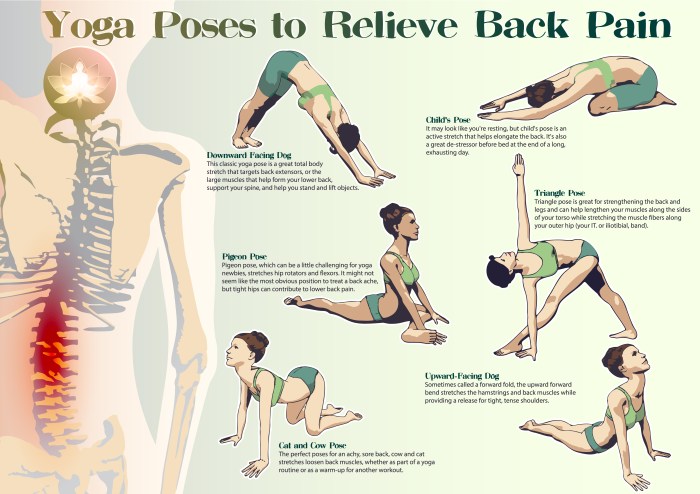
Practicing specific yoga poses can effectively alleviate back pain by stretching and strengthening the muscles in the back, improving flexibility, and promoting better posture.
1. Cat-Cow Pose, Yoga practice for back pain relief
The Cat-Cow Pose helps to increase flexibility in the spine and relieve tension in the back muscles. The gentle movements between arching and rounding the back can help improve spinal mobility and reduce stiffness.
2. Child’s Pose
Child’s Pose is a resting pose that stretches the lower back and helps release tension. By gently elongating the spine and relaxing the muscles, this pose can provide relief for tightness and discomfort in the back.
3. Downward-Facing Dog
Downward-Facing Dog is a full-body stretch that targets the back, shoulders, and hamstrings. This pose helps to lengthen the spine, strengthen the back muscles, and improve overall posture, reducing strain on the back.
4. Cobra Pose
The Cobra Pose strengthens the muscles along the spine and opens up the chest, promoting better posture and relieving compression in the lower back. It also helps to reduce stiffness and improve flexibility in the back.
5. Bridge Pose
Bridge Pose engages the muscles in the lower back, glutes, and hamstrings, providing a deep stretch and strengthening those areas. This pose can help alleviate back pain by improving core stability and promoting better alignment in the spine.
6. Pigeon Pose
Pigeon Pose is a hip-opening pose that can release tension in the hips and lower back. By stretching the hip flexors and glutes, this pose can help reduce strain on the back and improve overall mobility.
7. Supine Twist
Supine Twist is a gentle twist that helps to release tension in the spine and improve spinal mobility. This pose can alleviate back pain by stretching the muscles along the back and promoting relaxation in the lower back.
8. Seated Forward Bend
Seated Forward Bend stretches the entire back of the body, including the spine, hamstrings, and shoulders. By lengthening the spine and promoting relaxation, this pose can help reduce stiffness and discomfort in the back.
Tips and Guidelines for Practicing Yoga Safely
When practicing yoga to relieve back pain, it is essential to prioritize safety to avoid exacerbating any existing issues. Here are some tips and guidelines to help you practice yoga safely:
Modifications for Yoga Poses
It is crucial to modify yoga poses according to the level of back pain you are experiencing. Here are some modifications to consider:
- For individuals with severe back pain, opt for gentle yoga poses that do not put too much strain on the back.
- Use props such as blocks, bolsters, or straps to support your body in poses and reduce strain on the back.
- Avoid deep backbends or twists that may worsen your back pain, and focus on gentle stretches instead.
Frequency and Duration of Practice
To effectively relieve back pain through yoga, it is important to maintain a consistent practice. Here are some recommendations:
- Practice yoga for back pain relief at least 3-4 times a week to see noticeable improvements.
- Start with shorter sessions of 20-30 minutes and gradually increase the duration as your back pain improves.
- Listen to your body and take breaks when needed during your practice to avoid overexertion.
Integrating Yoga Practice with Other Wellness Programs
When it comes to back pain relief, integrating yoga practice with other wellness programs can be highly beneficial. Yoga not only helps in improving flexibility and strength but also complements other approaches such as physical therapy and health coaching to enhance overall well-being.
Yoga Complements Physical Therapy for Back Pain Relief
Yoga and physical therapy share a common goal of reducing back pain and improving mobility. While physical therapy focuses on specific exercises and techniques to target pain and rehabilitation, yoga offers a holistic approach by incorporating gentle stretches, poses, and breathing techniques to promote relaxation and alleviate tension in the back muscles.
Role of Health Coaching in Enhancing Yoga Practice
Health coaching can play a significant role in enhancing the effectiveness of yoga practice for back pain relief. Health coaches provide personalized guidance, motivation, and support to help individuals stay committed to their yoga routines, make healthy lifestyle choices, and address any obstacles or challenges that may hinder their progress.
Yoga Supporting Fitness Goals and Balanced Nutrition
Yoga can support fitness goals and promote overall balanced nutrition for a healthy back. Regular yoga practice can improve core strength, posture, and body awareness, which are essential for maintaining a strong and healthy back. Additionally, incorporating yoga into a well-rounded fitness regimen and balanced diet can contribute to overall well-being and prevent back pain recurrence.
The Role of Yoga Practice in Preventive Medicine: Yoga Practice For Back Pain Relief
Regular yoga practice plays a crucial role in preventing future back pain issues by strengthening the muscles that support the spine, improving flexibility, and promoting proper posture. This holistic approach to back health addresses both physical and mental well-being, making it an effective preventive measure for overall spinal health.
Connection between Yoga Practice and Maintaining a Healthy Spine
- Yoga helps in improving spinal alignment and flexibility, reducing the risk of injuries and strain on the back.
- Specific yoga poses target the core muscles, which support the spine and help in maintaining a strong and healthy back.
- Regular practice of yoga promotes better posture, which is essential for preventing back pain caused by poor alignment.
How Yoga Promotes Overall Health Awareness and Preventive Care
- Yoga encourages mindfulness and body awareness, allowing individuals to recognize early signs of discomfort or strain in the back.
- Practicing yoga regularly can reduce stress levels, which is a common contributor to back pain and other health issues.
- By integrating yoga into a wellness routine, individuals become more in tune with their bodies, making them proactive in maintaining their overall health and preventing future problems.
Yoga Practice for Emotional and Mental Well-being
Regular practice of yoga not only benefits the physical body but also plays a crucial role in enhancing emotional and mental well-being. The mind-body connection in yoga helps in achieving mental strength, emotional balance, and overall inner peace.
Mental Strength and Emotional Balance
- Yoga practice involves mindfulness and focusing on the present moment, which helps in developing mental strength and resilience.
- Through breath work and meditation in yoga, individuals can manage stress, anxiety, and negative emotions effectively, promoting emotional balance.
- The physical postures in yoga help release tension in the body, which in turn relaxes the mind and reduces emotional strain.
Connection between Yoga Practice and Improved Emotional Health
- Yoga encourages self-awareness and self-compassion, fostering a positive relationship with oneself and improving emotional health.
- By regulating the nervous system, yoga reduces the production of stress hormones, leading to a calmer state of mind and improved emotional well-being.
- Practicing yoga regularly can help individuals process and release stored emotions, leading to emotional healing and a sense of inner peace.
Benefits of Yoga in Promoting a Healthy Mind and Reducing Stress
- Yoga promotes relaxation and reduces the impact of chronic stress on the mind and body, enhancing overall mental health.
- Regular yoga practice increases the production of feel-good hormones like endorphins, serotonin, and dopamine, contributing to a positive mood and reduced stress levels.
- By cultivating a sense of mindfulness and gratitude, yoga helps individuals focus on the present moment, reducing rumination and promoting mental clarity.
Questions Often Asked
How often should I practice yoga for back pain relief?
It is recommended to practice yoga at least 2-3 times a week for effective back pain relief.
Are there specific yoga poses to avoid for back pain?
Avoid poses that put excessive strain on the back like deep backbends if you have back pain.
Can beginners with back pain start practicing yoga?
Yes, beginners with back pain can start with gentle poses and gradually progress under supervision.


More Stories
Importance of health awareness campaigns: Promoting Public Health through Education
Mens health checkups and screenings: Importance and Recommendations